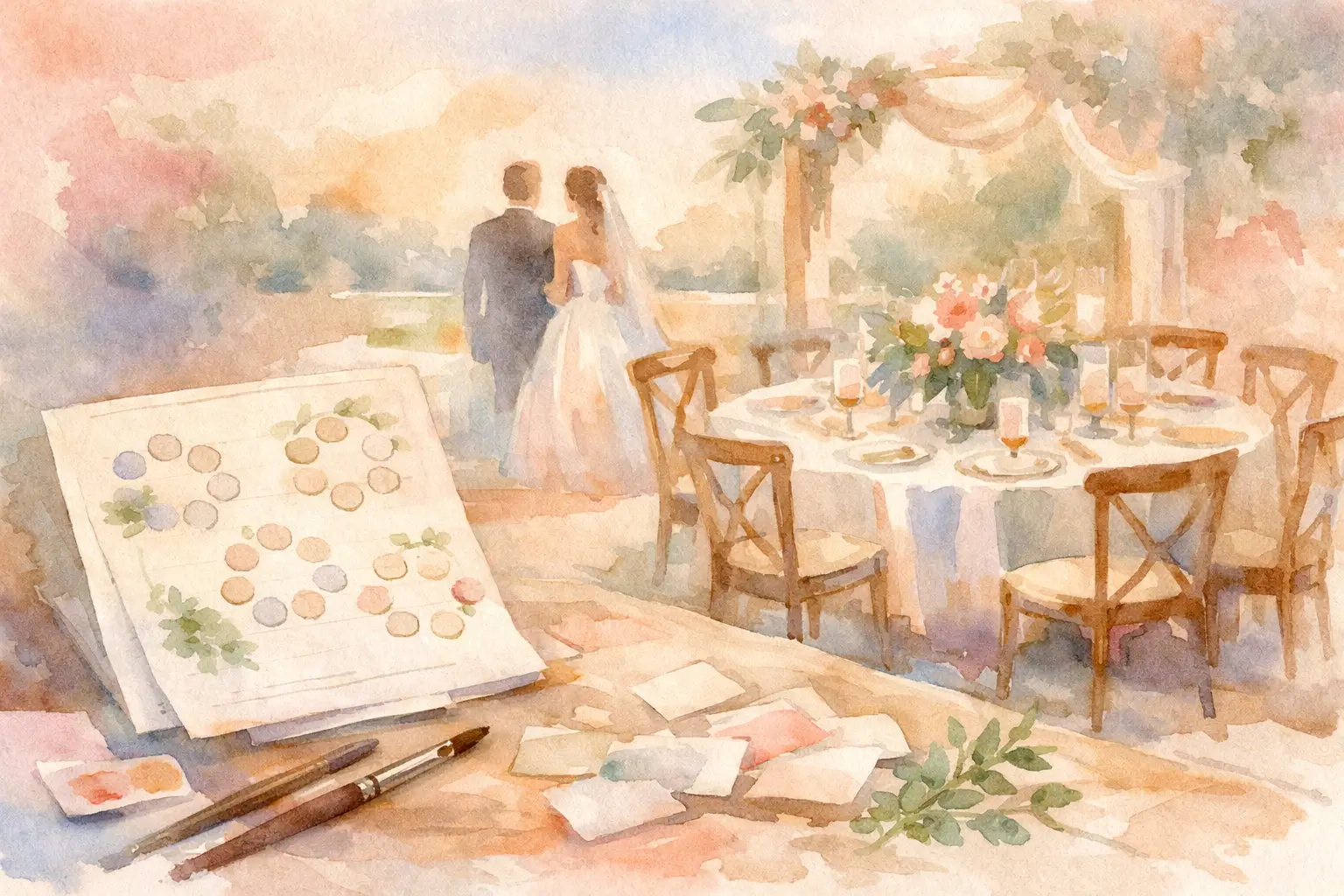
A seating chart can turn into one of those wedding tasks that looks simple on paper and suddenly feels very personal. If you are figuring out how to plan wedding seating, you are not just placing names in chairs. You are balancing family history, friendships, comfort, venue flow, and the kind of atmosphere you want guests to feel the moment they sit down.
That is why this part of planning deserves a little more care than a last-minute spreadsheet scramble. The good news is that it becomes much easier when you treat it like a series of small decisions instead of one giant emotional puzzle.
Start with the kind of reception you want
Before you sort a single guest into a seat, think about how you want the room to feel. A formal plated dinner usually needs a more precise seating plan because service timing matters and guests expect clear direction. A buffet or more relaxed reception gives you slightly more flexibility, but even then, assigning tables often helps avoid awkward wandering and overcrowded groups.
This is where couples sometimes get stuck. They assume seating is only about who gets along. In reality, it is also about energy. Do you want lively tables full of college friends who will keep the conversation going? Do you want older relatives in a quieter corner where they can hear each other? Do you want families mixed together to encourage connection, or would that create tension? There is no single right answer. It depends on your people and your priorities.
Build your guest list before you build your chart
It sounds obvious, but seating gets messy when the guest list is still changing daily. You do not need every RSVP returned before you start thinking it through, but you do need a realistic working list. Group guests by household, relationship, and any key dynamics you already know matter.
At this stage, make notes beside names. Mark elderly guests, parents with small children, people who may need easier access, and anyone who should probably not be seated together. This is not about judging anyone. It is about planning with kindness.
One of the most helpful things you can do is identify your non-negotiables early. Divorced parents who need space, a guest with mobility needs, or a friend who knows nobody else in the room should all be considered before you worry about perfect symmetry.
Understand the room before assigning seats
A seating chart works best when it reflects the actual space, not just the guest list. Ask for the venue floor plan and pay attention to table size, dance floor placement, exits, restrooms, and high-traffic areas. A table near the kitchen might be convenient for service but noisier. A table by the speakers may not be ideal for grandparents. A spot near the bar can feel fun for some guests and distracting for others.
If you are wondering how to plan wedding seating in a way that feels thoughtful, this is a big part of it. The best seat in the room is not always the closest one to you. For some guests, comfort matters more than visibility.
Also think about sightlines. Guests generally like to see the couple, hear the toasts, and feel included in the celebration. If someone is tucked around a corner or blocked by a pillar, that table can feel like an afterthought even if the pairing is otherwise perfect.
Decide whether to assign tables, seats, or both
Most weddings do well with assigned tables and open seating at each table. It gives guests structure without making the process too rigid. This option is especially useful if you have a moderate to large guest count and want to avoid a rush for seats.
Assigned seats within each table make more sense when the event is very formal, when catering needs precise place settings, or when family dynamics need close management. If you are dealing with delicate relationships, exact seats can prevent confusion. But they also create more work and leave less flexibility if RSVPs change at the last minute.
For many couples, assigning tables is the sweet spot. It keeps things organized while still feeling relaxed.
Place your VIP tables first
Start with the people closest to you. That usually means the couple, wedding party if you are having one, parents, grandparents, and siblings. Once those tables are placed, the rest of the chart becomes much easier to build around them.
There is no rule that says every parent must sit at one head table or that every member of the wedding party must be seated together. Sometimes the most comfortable choice is to split traditions a bit. A maid of honor may prefer to sit with her spouse. Divorced parents may appreciate separate tables with their own support systems. Grandparents may be happier near relatives they see often instead of in a highly visible spot.
This is one of those areas where wedding etiquette matters less than guest comfort. The kindest seating plan usually feels better than the most traditional one.
Group guests by connection, not just category
It is tempting to create tables labeled coworkers, cousins, college friends, and neighbors. Sometimes that works beautifully. But people connect best when there is a reason for conversation beyond a matching title in your life.
Think about personality, age range, communication style, and social comfort. A table of outgoing friends may be a great fit. So can a mixed table where two or three people already know each other and can help welcome newer faces into the conversation.
Try not to create a table made up entirely of people who know no one else. That can feel like the leftover table, even when that was never your intent. If you need to blend groups, place natural connectors there – people who are warm, chatty, and good at drawing others in.
Be careful with the “problem table”
Almost every wedding has a few relationships that need extra thought. Maybe it is divorced family members, an old friend group with tension, or relatives who love each other in small doses. This is where honesty helps.
Do not seat difficult combinations together just because it looks balanced on paper. A visually even chart is not worth a tense dinner. It is better to leave a little empty space at one table or break up a group than to force an uncomfortable match.
At the same time, you do not have to overcorrect. People can usually handle being in the same room. They just may not need to be elbow to elbow over salad and speeches.
Think through practical comfort
The most welcoming seating chart considers real-life needs. Older guests and anyone with mobility concerns should have easy access to entrances, exits, and restrooms. Families with young children often appreciate a little extra space. Guests who are hard of hearing usually do better away from speakers or extremely loud tables.
If you are planning a sweetheart table, make sure your closest family and wedding party still feel well placed and included. If you are doing a head table, check whether partners of attendants should be nearby rather than across the room. Little placement choices can make people feel seen.
This is also a good moment to look at your table counts realistically. Overcrowded tables make dinner less comfortable and conversation harder. If your venue says a table seats ten, that may mean ten fits, not ten feels good.
Use a flexible planning method
Whether you use sticky notes, a digital tool, or index cards on a dining room table, choose a method that lets you move names around easily. Wedding seating almost always changes a few times. A guest declines. A plus-one gets added. A family situation shifts. Flexibility saves stress.
Keep your chart simple enough that both you and your venue team can follow it quickly. Clear table numbers or names, accurate guest spelling, and one final version shared with the right vendors will make setup much smoother.
If you feel overwhelmed, step away and come back later. Seating charts are easier to solve when you stop trying to make every table perfect. You are aiming for comfortable, considerate, and functional – not a flawless social masterpiece.
How to plan wedding seating when feelings get involved
This is often the hardest part. Weddings bring out emotion, and seating decisions can stir up old sensitivities. Try to make choices based on hospitality, not guilt. You are not ranking people by love or importance. You are organizing a room so your guests can enjoy a meaningful celebration.
It can help to remember that most guests care far less about where they sit than couples fear they will. They want to be welcomed, fed, and included. If the table feels friendly and the evening flows well, the seating has done its job.
At Wedding and Event Guide, we believe the best wedding plans support both the heart of the day and the people sharing it with you. A thoughtful seating chart does exactly that. It creates comfort quietly, without needing attention, so the moments that matter can take center stage.
As you finalize yours, aim for kindness over perfection. Guests may not remember their exact table number years from now, but they will remember how your wedding felt.
Leave a Reply